
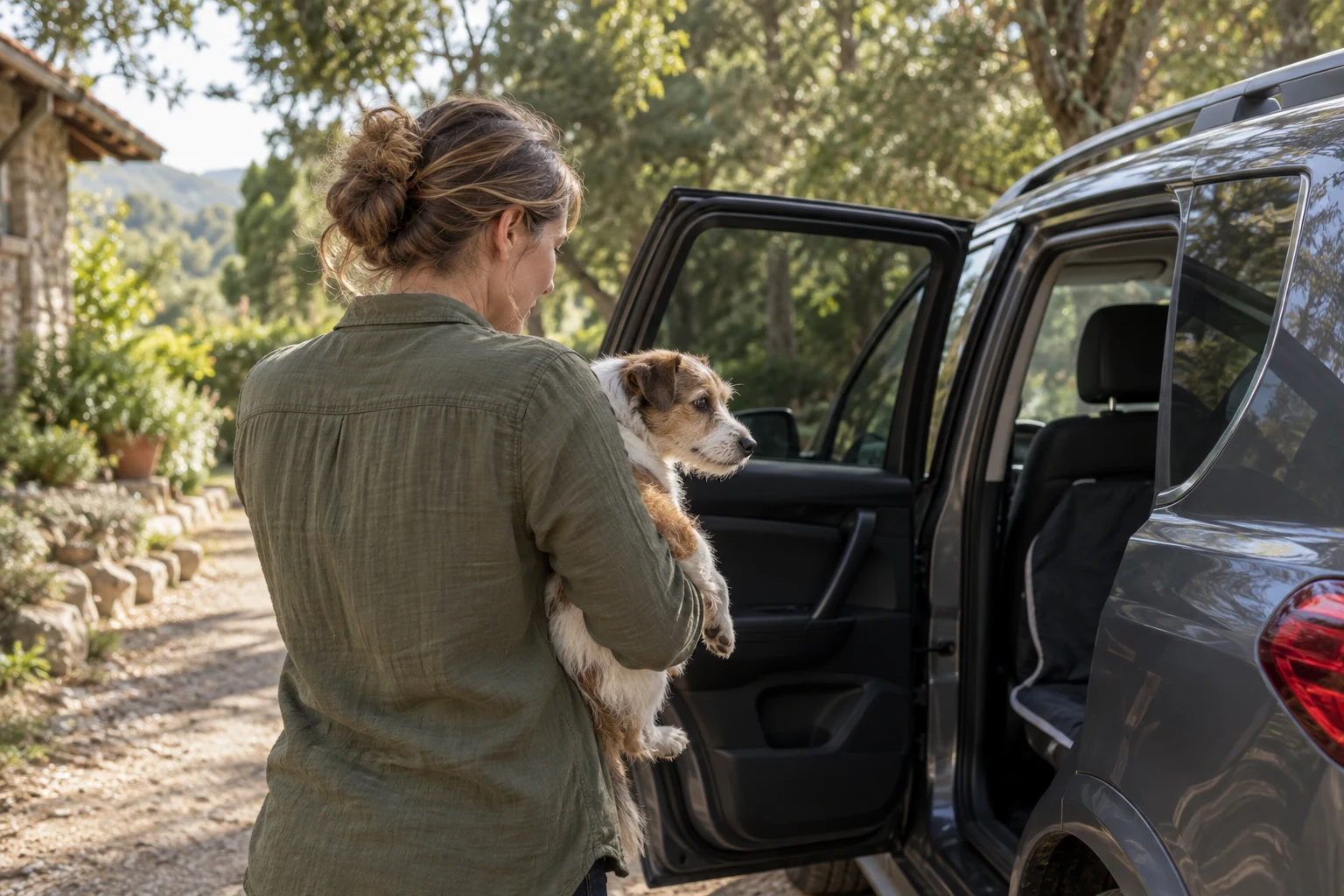
Move everyone away from the snake, keep the dog or cat calm and still, and seek emergency veterinary care immediately without delaying transport. Carry them when safe. Do not cut or suck the wound, apply ice, heat or a tourniquet, or catch the snake. Do not improvise pressure immobilisation unless a veterinarian or authoritative regional veterinary guidance for pet snakebite recommends it. Seek care even before obvious signs appear.
Snake species, venoms and treatment options differ greatly between countries and regions. A safe public response is therefore simple: prevent another bite, minimise the animal’s movement and let a local veterinarian assess the risk without delay.
Why is a suspected snakebite an emergency?
A venomous bite can affect breathing, blood clotting, circulation, nerves, muscles or tissue. The pattern depends on the snake, venom dose, bite location and patient. Not every bite injects venom, but fang marks and early effects may be difficult to see. A veterinarian must assess that uncertainty, monitor for complications and decide whether locally appropriate antivenom or supportive treatment is indicated.
What should I do first?
First, create distance. Bring other animals and people indoors or into a vehicle without approaching the snake. Do not corner, handle or kill it; even a dead or injured snake can be dangerous, and trying to capture it risks another bite.
Then reduce the patient’s activity. Carry a small dog or a cat in a secure carrier if possible. A larger dog may be moved on a blanket if enough people can do so safely. Keep the animal quiet. Remove a collar or tight item if swelling could make it restrictive, but do not delay transport to search for the wound.
Call the nearest emergency veterinary provider while preparing to leave. Say that a snakebite is suspected, describe the animal’s current condition and ask where to go. A clinic may advise a different destination if it lacks overnight monitoring or locally appropriate antivenom.
Which signs may occur after a snakebite?
Possible signs include:
- sudden pain, yelping or jumping away from vegetation or a snake;
- paired punctures, bleeding, bruising or rapidly developing swelling;
- weakness, wobbliness, unusual stillness or collapse;
- drooling, vomiting or loss of bladder or bowel control;
- abnormal bleeding or pale gums;
- tremors, paralysis, altered awareness or seizures;
- noisy, difficult or unusually slow breathing.
These signs are not specific to snakebite, so urgent veterinary assessment—not home diagnosis—is essential. Difficulty breathing, collapse, severe weakness, uncontrolled bleeding or seizures require immediate transport.
What information helps the veterinary team?
If it is safe and does not delay care, note the approximate time and place of the encounter and what you saw. A photograph taken from a substantial distance may help local professionals, but never move closer, handle the snake or delay departure to obtain one.
Tell the clinic about:
- the animal’s species, approximate weight and current signs;
- where on the body the bite may have occurred;
- changes since the suspected encounter;
- known medical conditions, medication and previous reactions;
- the snake’s appearance only if observed without added risk.
Do not rely on colour, pupil shape or another single feature to identify a snake. Identification is difficult, varies by region and should not distract from treatment.
Which first-aid methods should I avoid?
Do not:
- cut, squeeze or suck the bite;
- apply ice, heat, electrical shock or chemicals;
- place a tourniquet or a bandage that cuts off circulation;
- give human painkillers, antihistamines or other medicines unless the attending veterinarian specifically directs their use;
- offer food or force water while urgent assessment is being arranged;
- encourage walking to “keep the animal awake”;
- wait for swelling, weakness or fang marks before calling.
Merck and the UC Davis School of Veterinary Medicine warn that commonly promoted measures such as incision, suction, ice and tourniquets are ineffective or potentially harmful. They can injure tissue and delay the treatment that matters.
Pressure-immobilisation guidance differs by region and snake group. In some regions, including Australia, authoritative veterinary and animal-welfare guidance may recommend a pressure-immobilisation bandage for certain suspected pet snakebites. Do not improvise one unless recommended by a veterinarian or authoritative veterinary guidance for pet snakebite in that region. Follow that guidance without delaying transport. Do not transfer a human protocol to a dog or cat on your own.
How should I transport the animal?
Use the quietest, least strenuous route available. Secure a cat in a carrier; keep a dog restrained without compressing the neck or a swollen area. Carry the animal to the vehicle when safe. Maintain a comfortable temperature and avoid unnecessary handling of a painful site.
If the dog or cat becomes unresponsive or has breathing difficulty, update the clinic while travelling so staff can prepare. Do not put your face close to a distressed animal’s mouth: pain and fear can cause even a familiar animal to bite.
The clinic may recommend observation after assessment because some effects evolve over time. Follow its discharge and recheck instructions exactly; improvement at home does not justify stopping prescribed monitoring or treatment.
Can the severity be predicted from the snake or wound?
No. A large wound does not always mean more venom, and tiny or invisible punctures do not prove that the bite was harmless. “Dry bites” can occur, but they can be confirmed only through professional assessment and observation, not assumed from an animal’s early appearance.
Local snake knowledge helps the veterinary team choose tests and treatment, yet treatment is based on the whole clinical picture. Antivenom is not a home product or a substitute for hospital care. The potential benefit, product choice, dose and reaction monitoring are veterinary decisions.
How can future encounters be reduced?
Walk dogs on a lead in snake habitat, keep them out of dense vegetation and holes, and use a light at night. Maintain clear paths around the home, remove avoidable hiding places near animal areas and supervise cats outdoors where this is feasible. Local wildlife authorities can advise on lawful snake management and habitat-specific precautions.
Prevention cannot eliminate every encounter. A practical plan includes the number and route for an emergency veterinary provider, a secure carrier or safe lifting method, and awareness of venomous snakes in the region.
Practical Takeaway
Treat a suspected venomous snakebite as an emergency. Move away from the snake, keep the dog or cat calm and still, carry them when safe, call an emergency veterinarian and travel promptly. Do not catch the snake or use incision, suction, ice, heat, tourniquets or unprescribed medicines. Do not improvise a pressure-immobilisation bandage unless a veterinarian or authoritative regional veterinary guidance for pet snakebite recommends it; some Australian guidance may do so. Never delay transport to apply a bandage.
Frequently Asked Questions
What if I cannot find fang marks?
Call a veterinarian anyway if the encounter or sudden signs make snakebite plausible. Marks may be hidden by fur or difficult to see, and their absence does not exclude envenomation.
Should I take a photograph of the snake?
Only from a safe distance, without delaying care. Never approach, corner or handle a snake for identification.
Can a dog or cat survive a venomous snakebite?
Many can recover with prompt, appropriate care, but outcome depends on the snake, venom dose, bite location, patient and access to treatment. A home prediction is unsafe.
What if my animal seems normal after the encounter?
Seek veterinary advice immediately. Some important effects are not obvious at first, and waiting for symptoms can lose valuable treatment time.
Does a rattlesnake vaccine mean a dog can stay home?
No. UC Davis notes that the safety and efficacy of the vaccine are not established and it does not provide immunity. Any suspected bite still requires urgent veterinary care. Vaccine availability and advice are regional.
Sources
Source 1
Organisation / publisher: Merck Veterinary Manual
Title: Snakebites in Animals
URL: https://www.merckvetmanual.com/toxicology/snakebite/snakebites-in-animals
Use: Emergency status, regional variation in venom effects, need for prompt examination, keeping the animal quiet, and first-aid measures that are ineffective or harmful.
Checked: 5 October 2026
Source 2
Organisation / publisher: Merck Veterinary Manual
Title: Evaluation and Initial Treatment of Dog and Cat Emergencies
URL: https://www.merckvetmanual.com/special-pet-topics/emergencies/evaluation-and-initial-treatment-of-dog-and-cat-emergencies
Use: Possible snakebite as an immediate-treatment emergency and the role of rapid veterinary triage, history and monitoring.
Checked: 5 October 2026
Source 3
Organisation / publisher: University of California, Davis, School of Veterinary Medicine
Title: Pet First Aid 101
URL: https://synergy.vetmed.ucdavis.edu/pet-first-aid-101-fall-2020
Use: Public-facing actions to maintain safety, reduce movement, carry the animal when possible, obtain urgent care, avoid catching the snake, and avoid incision, suction, tourniquets and ice.
Checked: 5 October 2026
Source 4
Organisation / publisher: University of California, Davis, School of Veterinary Medicine
Title: Venomous Snakebites in Cats
URL: https://healthtopics.vetmed.ucdavis.edu/health-topics/venomous-snakebites-cats
Use: Immediate veterinary assessment, variable clinical signs, limits of predicting venom delivery, prohibited first-aid methods, treatment context and cautious vaccine wording. US examples were identified as regional rather than universal.
Checked: 5 October 2026
Source 5
Organisation / publisher: RSPCA New South Wales
Title: Snake Bites
URL: https://www.rspcansw.org.au/information-and-advice/caring-for-animals/pet-hazards/snake-bites/
Use: Australian pet-specific guidance recommends a pressure bandage when a veterinarian is far away, alongside keeping the animal calm, immediate veterinary care and no tourniquet. This regional recommendation is not presented as a universal protocol.
Checked: 5 October 2026
Source 6
Organisation / publisher: Animal Emergency Service, Australia
Title: A Guide To Snake Bites On Dogs (symptoms, signs and treatment)
URL: https://animalemergencyservice.com.au/blog/a-guide-to-snake-bites-on-dogs/
Use: Updated 29 April 2026. Australian veterinary guidance includes a firm bandage when the bite site is known and application is possible, while prioritising immediate veterinary assistance, reduced movement and avoidance of tourniquets. Used only to support the regional qualification, not to supply a universal bandaging technique.
Checked: 5 October 2026
Questions or corrections? Contact Aniluba and include this page’s address.