
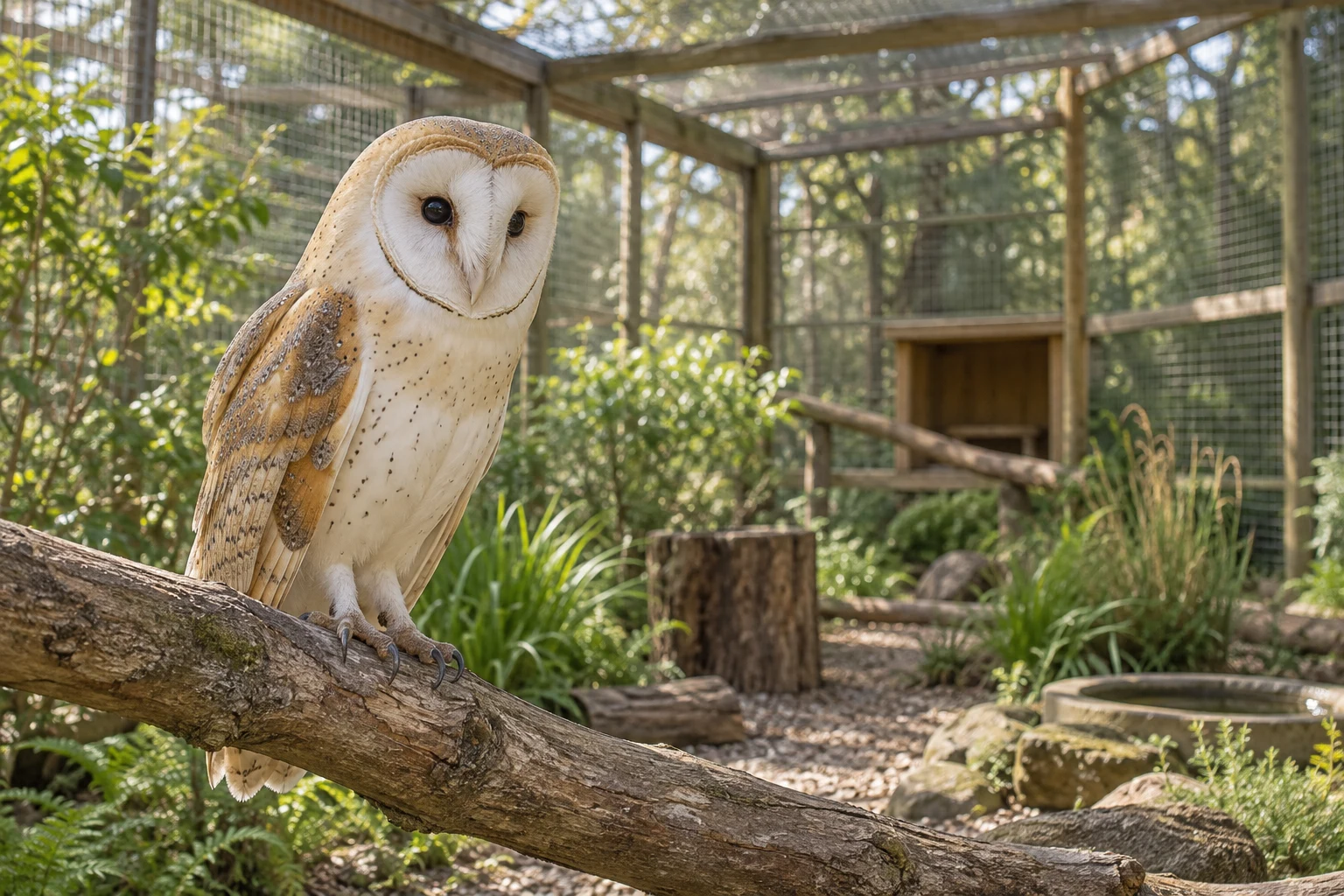
Ask whether the centre is authorised for its work, has appropriate veterinary support and species expertise, protects animals from unnecessary human contact, and uses clear criteria for release or other humane outcomes. Request an explanation of case results and how donations support care. A high release rate or moving rescue video alone cannot establish the quality of a rehabilitation programme.
Wildlife rehabilitation aims to return suitable animals to life in the wild. It needs more than kindness and a place to hold them. Donor questions should reveal how a provider protects welfare during care, makes difficult decisions and learns from outcomes. Begin with the ordinary identity and payment checks for any animal organisation, then examine these specialist responsibilities.
Is the provider authorised for the animals and activities involved?
Ask which wildlife authority oversees the work and what permissions cover the species, locations and activities described. Charity registration and permission to rehabilitate wildlife answer different questions.
Requirements vary by country and, sometimes, by state or province. For example, US federal migratory-bird rehabilitation permissions must be accompanied by compliance with applicable state requirements. That permit does not itself authorise keeping birds for education. New South Wales, Australia, also sets specific conditions for licensed rehabilitation and permanent possession. These examples must not be treated as worldwide rules. [1, 2]
Ask for the relevant licence or authority details, then verify them through independently obtained official contacts where verification is available. A provider should explain arrangements if volunteers operate under an organisation's authorisation. Avoid assuming a professional-looking website proves permission, or that an unfamiliar local licensing structure indicates wrongdoing.
Who provides veterinary care and specialist expertise?
Ask how animals receive assessment, veterinary care when needed, and referral when the provider cannot meet their needs. Useful answers identify roles and arrangements rather than simply saying “we love animals”.
The International Wildlife Rehabilitation Council's ethics guidance emphasises continuing education, recognising limitations and obtaining help from veterinarians and other trained professionals. A good question is: “What happens if an animal needs care or facilities you cannot provide here?” [3]
The answer may involve a partner clinic or transfer to another authorised organisation. An on-site veterinary hospital is not the only possible model. Ask about relevant species experience and how care is maintained when the usual personnel are unavailable. The purpose is to understand the care pathway, not to request treatment instructions or confidential clinical records.
How are animals kept suitable for life in the wild?
Ask how the centre limits unnecessary handling, public contact and dependence on people, and how it prepares suitable animals for release. Rehabilitation should preserve wildness rather than make releasable animals attractions. [3]
Facilities and routines need to reflect the species being cared for. Ask how the provider assesses readiness, including the abilities needed for independent life and the suitability of the release setting. Research shows that rehabilitation and post-release outcomes are species- and context-dependent; a reassuring photograph cannot demonstrate these capacities. [4]
Do not demand a close encounter with patients as proof of transparency. In New South Wales, the rehabilitation licence conditions prohibit public viewing or exhibition of protected animals undergoing rehabilitation, with specified exceptions. Other places have their own rules. A centre can explain policies and results without letting visitors handle wildlife. [2]
What do its outcome figures actually measure?
Ask for a clearly defined reporting period and the numbers admitted, released, transferred, euthanised, dying in care and still in care, where those categories are applicable. Understand exclusions before comparing percentages.
New South Wales requires rehabilitation records including species, rescue circumstances and fate. Those fields illustrate why an outcome needs context: a provider receiving many severely injured animals is not serving the same case mix as one mainly receiving otherwise healthy displaced young. [5]
A release rate describes departure from care. It does not necessarily measure survival after release. Ask whether any animals are followed, how monitoring works and what remains unknown. A systematic review found differences in monitoring methods and periods, with some animals unaccounted for because of movement, equipment failure or the end of fieldwork. Missing follow-up must not be presented as confirmed survival or automatically counted as death. [4]
A centre that acknowledges uncertainty gives donors information they can use. Scientific reviews also identify limitations in rehabilitation research; confidence should match the evidence, rather than exceed it. [6]
How does it explain animals that cannot be released?
Ask who makes welfare decisions, when veterinary advice is sought and how local permissions affect transfer, permanent placement or euthanasia. Do not require a promise that every animal will survive or be released.
The IWRC's ethics guidance places animal welfare and humane care at the centre of decisions. Keeping an animal alive is not the same as ensuring that it has an acceptable future. Permanent captivity is not automatically appropriate or legally available. [3]
For US federally regulated migratory birds, suitable non-releasable animals may require specific approval and an appropriate authorised destination. Other jurisdictions have different arrangements. This is a question about the decision process, not an invitation for donors to determine an individual animal's treatment or placement. [1]
What will the donation enable, and can the centre sustain it?
Ask what the appeal funds and how the provider will meet the continuing needs attached to it. For an enclosure project, for example, useful follow-up concerns staffing, maintenance and which animals it can serve, rather than construction alone.
Request financial and activity information proportionate to the organisation and gift. Clarify whether money supports a named project or general work, and what happens if the stated need changes. Charity Commission guidance for England and Wales stresses understanding donor conditions and the intended use of funds; legal duties elsewhere must be checked locally. [7]
Do not make free services, immediate replies or zero support costs a condition of your trust. The more useful test is whether explanations are consistent, specific and supported. If a material question remains unanswered, pause the donation and seek clarification through verified contact details.
Practical Takeaway
Before giving, obtain five clear explanations: authorisation, care expertise, protection of wild behaviour, honestly defined outcomes and the purpose of your gift. Verify important details independently where possible. Support a credible care process, and allow room for difficult humane decisions and openly stated uncertainty.
Frequently Asked Questions
Does charity registration prove a centre can rehabilitate wildlife?
No. Charitable status and wildlife permissions are separate. Check which authorisation is required locally and whether it covers the work being promoted.
Should I choose the centre with the highest release rate?
Not on that figure alone. Definitions, species, injury severity, exclusions and reporting periods can differ. Ask what the rate includes and what is known after release.
Is refusal to let me meet patients a warning sign?
Not by itself. Restricting contact can protect wild behaviour and comply with licence conditions. Look for explanations, policies and appropriate reporting instead.
Does euthanasia mean my donation was wasted?
No. Responsible care may include a humane decision when recovery or an appropriate future is not possible. Ask about professional oversight rather than demanding survival at any cost.
Can a small provider be worth supporting?
Yes, if its authorisation, expertise, care arrangements and reporting fit its actual work. Size and sophisticated fundraising are not substitutes for those safeguards.
Sources
Source 1
Organisation / publisher: US Fish and Wildlife Service
Title: 3-200-10b: Migratory Bird Rehabilitation
URL: https://www.fws.gov/service/3-200-10b-migratory-bird-rehabilitation
Use: US federal permit scope, state compliance, separate educational possession and approved arrangements for suitable non-releasable birds. Applies to covered US migratory birds, not every wildlife species or country.
Checked: 2 October 2026
Source 2
Organisation / publisher: New South Wales Government, Environment and Heritage
Title: Obtaining a Wildlife Rehabilitation Licence
URL: https://www.environment.nsw.gov.au/topics/animals-and-plants/native-animals/rehabilitating-native-animals/wildlife-rehabilitation-licences
Use: NSW authorisation, training, permanent possession and public-viewing conditions. NSW examples only; exceptions to viewing restrictions acknowledged.
Checked: 2 October 2026
Source 3
Organisation / publisher: International Wildlife Rehabilitation Council
Title: Best Practices — Standards for Wildlife Rehabilitation and Code of Ethics
URL: https://theiwrc.org/resources/guidelines-for-wildlife-rehabilitation/
Use: Accessible ethics guidance on continuing education, professional assistance, wildness, humane decisions and honest conduct. The full current standards book was not available and is not represented as read.
Checked: 2 October 2026
Source 4
Organisation / publisher: Cope and colleagues; PLOS ONE
Title: A Systematic Review of Factors Affecting Wildlife Survival During Rehabilitation and Release (2022)
URL: https://journals.plos.org/plosone/article?id=10.1371/journal.pone.0265514
Use: Species- and context-dependent outcomes; distinction between release and post-release survival; limitations of monitoring and comparisons. No pooled rate used as a centre-quality benchmark.
Checked: 2 October 2026
Source 5
Organisation / publisher: New South Wales Government, Environment and Heritage
Title: Wildlife Rehabilitation Reporting
URL: https://www.environment.nsw.gov.au/topics/animals-and-plants/native-animals/rehabilitating-native-animals/wildlife-rehabilitation-data-and-reporting/reporting
Use: Example of records identifying species, rescue circumstances and fate. NSW reporting requirements are not generalised internationally.
Checked: 2 October 2026
Source 6
Organisation / publisher: Massie and colleagues; Veterinary Quarterly
Title: Methodological Rigour and Reporting Quality of the Literature on Wildlife Rescue, Rehabilitation, and Release: A Global Systematic Review (2025)
URL: https://pmc.ncbi.nlm.nih.gov/articles/PMC11980188/
Use: Research and reporting limitations; reason to qualify claims rather than equate confident promotion with strong evidence.
Checked: 2 October 2026
Source 7
Organisation / publisher: Charity Commission for England and Wales
Title: Chapter 2: Due Diligence, Monitoring and End Use of Funds
URL: https://www.gov.uk/government/publications/charities-due-diligence-monitoring-and-verifying-the-end-use-of-charitable-funds/chapter-2-due-diligence-monitoring-and-end-use-of-funds
Use: Donor intentions, conditions and clarity about use of money; jurisdiction identified and no universal charity-law requirement asserted. Budget and care-capacity questions are editorial applications, not a regulator's published wildlife-centre checklist.
Checked: 2 October 2026
Questions or corrections? Contact Aniluba and include this page’s address.