
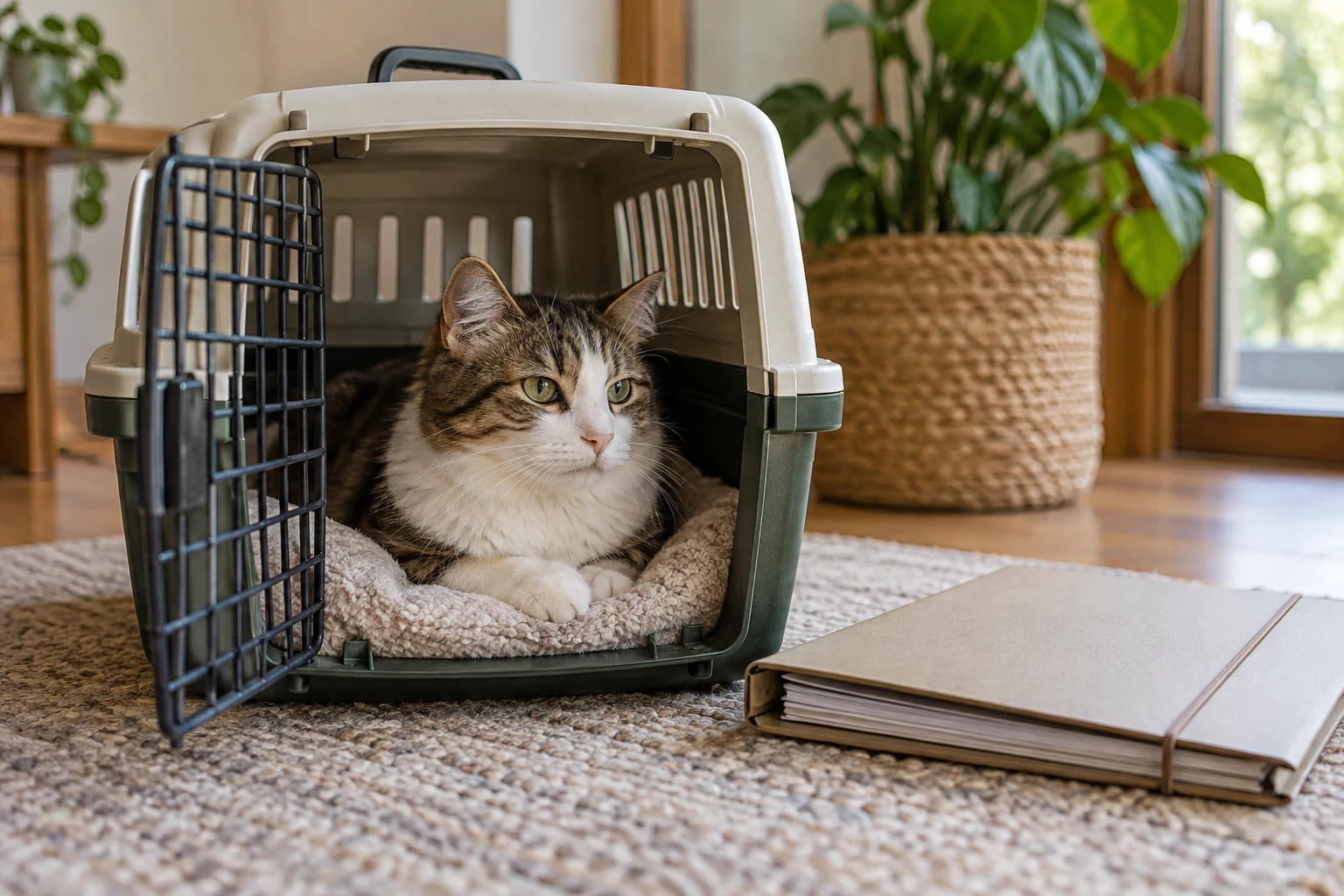
Prepare by sharing the animal’s known medical and behavioural history with the clinic, practising safe transport in small steps and asking how the visit can be adapted. Use a suitable carrier, harness or transport enclosure, familiar bedding where appropriate, and rewards the animal values. Do not force practice through panic or give calming medication unless the veterinarian has prescribed it for that individual animal. Urgent illness or injury should never be delayed for training.
A newly adopted animal may be coping with unfamiliar people, routines, transport and handling at the same time. A veterinary visit can still be necessary early in the adoption, but preparation can reduce avoidable pressure. “Low stress” does not mean guaranteeing a completely relaxed visit. It means noticing the individual’s response, preventing unnecessary escalation and helping the veterinary team obtain the care that is genuinely needed.
What should I learn before booking the visit?
Ask the adoption organisation for the animal’s medical record, current medicines, diet, vaccination and parasite-control information, known allergies, previous veterinary notes and any observed handling or transport concerns. Request facts rather than labels. “Moved away when ears were touched” is more useful than “difficult”, and “travelled quietly in a covered carrier” is more useful than “good in the car”.
Tell the clinic that the animal is newly adopted and that parts of the history may be unknown. Mention known fear, escape attempts, motion sickness, defensive behaviour, pain, sensory impairment or previous bite and scratch incidents. This information helps the clinic plan staffing, timing, entry and handling without prejudging the animal.
If the visit is routine, ask whether a quieter appointment time, direct entry to an examination room or waiting outside until the room is ready is available. Arrangements vary by practice and climate; an animal must never be left unattended in a vehicle where temperature or security could become unsafe.
How can I prepare the carrier or journey?
Use transport equipment suited to the species, size, health and escape risk. Cats and many small animals need a secure, well-ventilated carrier that can be opened without a chase. A removable top can allow some cats to remain in the carrier base during parts of an examination. Keep a cat carrier available in the home when possible, with familiar bedding and occasional treats or play nearby, so it does not appear only before frightening journeys.
For dogs, check that the collar or harness fits securely and that the lead and vehicle-restraint arrangement are suitable. Practise calm entry to the vehicle and short journeys if travel is safe and the animal can remain below its distress threshold. Other species need species-specific transport advice: temperature, ventilation, enclosure design, visual cover and social separation cannot be assumed from dog or cat guidance.
Familiar scent can help some animals, but bedding should be clean and safe, without loose material that could entangle, overheat or obstruct ventilation. Secure the carrier in the vehicle and carry it from underneath rather than letting it swing by one handle.
Can handling practice make the examination easier?
Gentle, reward-based practice can help, especially when it is brief and voluntary. Depending on the animal, this might include stepping onto a mat or scale, approaching a carrier, accepting a light touch to the shoulder, or briefly presenting a paw. Pair a very small step with food, play or another suitable reward, and finish while the animal is still coping.
Practice should not imitate a full veterinary examination at home. Do not pin the animal down, repeatedly expose a painful area or continue because it has become still. Freezing can be a fear response, not consent. Stop when you see avoidance, rapid escalation, attempts to flee, defensive behaviour or an inability to take a normally valued reward.
Some adopted animals need veterinary or qualified behaviour support before cooperative-care practice is safe. Training is preparation for future care, not a reason to postpone a necessary examination.
What should I take and tell the veterinary team?
Bring the available records and a concise list of observations: appetite, drinking, toileting, sleep, mobility, breathing, skin or coat changes, current medicines and the reason for the visit. Photos or short videos taken safely at home may show a cough, gait change or intermittent behaviour that is absent in the clinic. They supplement rather than replace examination.
Bring appropriate rewards unless the clinic has instructed you to withhold food for a procedure or test. Ask before feeding if fasting may be required. Tell staff which rewards and handling approaches have helped, but allow the clinical team to decide what is medically safe.
Accurate safety information matters. Quietly disclose any known bite, scratch, escape or restraint history before contact begins. Hiding it can put the animal, staff and other visitors at greater risk.
Can medication help a very fearful animal?
Sometimes. A veterinarian may recommend an individually prescribed pre-visit medicine or a different clinical plan when fear makes travel or examination unsafe or compromises care. The choice, dose, timing and suitability depend on the animal’s species, health, other medicines and purpose of the visit.
Do not give human medication, another animal’s medicine, leftover sedatives or unverified calming products. If the veterinarian prescribes a medicine, follow the instructions exactly and report the response. Some plans include a supervised trial before the appointment so the veterinary team can assess its effect; only do this when directed.
Medication is not a substitute for suitable handling and environment. Nor is sedation a failure: when clinically appropriate, it may be safer and more humane than escalating physical restraint.
What if the animal becomes overwhelmed at the clinic?
Tell the team as soon as you notice escalating fear or defensive behaviour. The veterinarian may change the order of the examination, use a quieter location, allow more distance, defer a non-urgent procedure or discuss medication or sedation. What can safely be postponed depends on the animal’s condition; the caregiver should not make that medical decision alone.
Afterwards, record what helped and what did not. That short note can make the next appointment more predictable and prevents each visit from starting with guesswork.
Practical Takeaway
Share the animal’s known history before the appointment, prepare secure species-appropriate transport, practise only in small reward-based steps and ask the clinic for an individual visit plan. Bring records and observations, disclose safety concerns and use medication only under veterinary direction. The goal is necessary care with the least avoidable fear and force—not a performance of perfect calm.
Frequently Asked Questions
How soon after adoption should an animal see a veterinarian?
The timing depends on the animal’s health, available records and the adoption organisation’s instructions. Urgent symptoms need prompt care. For a routine first visit, ask the chosen clinic when the animal should be seen rather than relying on one universal timetable.
Should I wait until my adopted animal fully trusts me?
Not if care is needed. Trust-building and healthcare can proceed together. Tell the clinic how recently the animal arrived so it can balance medical priorities with a lower-stress approach.
Should I cover my cat’s carrier?
A light visual cover can help some cats, provided ventilation and temperature remain safe and the cat can be monitored. Other cats may prefer more visual access. Observe the individual and follow clinic advice.
Can I ask to wait outside with my animal?
Yes. Ask whether the clinic can call you when a room is ready. This may reduce exposure to noise or other animals, but only wait in a location that is secure and temperature-safe.
What if my animal will not enter the carrier?
For a future routine visit, contact the clinic early for a carrier-training and transport plan. Avoid a prolonged chase. If the animal needs urgent care, tell the clinic before attempting transport so it can advise on the safest immediate approach.
Sources
Publisher: Feline Veterinary Medical Association
Title: Getting Your Cat to the Veterinarian
URL: https://catfriendly.com/be-a-cat-friendly-caregiver/getting-cat-veterinarian/
Use: Carrier familiarity, safe carrier features, familiar bedding, calm loading and short practice journeys.
Checked: 25 September 2026
Publisher: American Association of Feline Practitioners and International Society of Feline Medicine
Title: 2022 AAFP/ISFM Cat Friendly Veterinary Interaction Guidelines: Approach and Handling Techniques
URL: https://doi.org/10.1177/1098612X221128760
Use: Responding to the individual cat’s emotional state, perceived control, handling and safety during veterinary care.
Checked: 25 September 2026
Publisher: American Veterinary Society of Animal Behavior
Title: AVSAB Position Statement on Positive Veterinary Care
URL: https://avsab.org/wp-content/uploads/2024/12/Positive-Veterinary-Care-Position-Statement-download.pdf
Use: Recognition of fear and anxiety, preparation, positive associations and avoidance of unnecessary force.
Checked: 25 September 2026
Publisher: Association of Shelter Veterinarians
Title: Guidelines for Standards of Care in Animal Shelters, Second Edition
URL: https://doi.org/10.56771/ASVguidelines.2022
Use: Sharing medical and behavioural records, minimal necessary restraint, trained interpretation of body language and veterinary oversight of behavioural medication.
Checked: 25 September 2026
Questions or corrections? Contact Aniluba and include this page’s address.