Start by removing preventable hazards: give ponds and water containers an escape route, store loose netting, check vegetation before cutting, avoid unnecessary pesticides, mark dangerous glass and manage pets responsibly. Use locally appropriate, non-invasive plants and keep feeding areas clean. Before handling a trapped or injured wild animal, contact an authorised local wildlife professional; laws and safe methods vary by species and place.
A garden does not need to be untidy or filled with feeders to help wildlife. Adding food, water or shelter can draw in more animals, so check every feature for trapping, collision, disease and disturbance risks.
How should I carry out a wildlife safety check?
Walk through the garden slowly at ground level and again looking upward. Check after storms and whenever furniture, fencing, tools or seasonal decorations change.
Look for:
- steep-sided water containers or uncovered drains;
- loose or discarded netting, wire, string and plastic loops;
- open chemicals, glue traps or poison baits;
- sharp fencing, unstable piles and uncovered holes;
- glass near vegetation or feeders;
- outdoor lighting that removes dark routes;
- places where domestic animals can stalk, corner or injure wildlife.
Do not assume that a garden product is harmless to wildlife. Follow the label and local rules.
How can I make a pond safer?
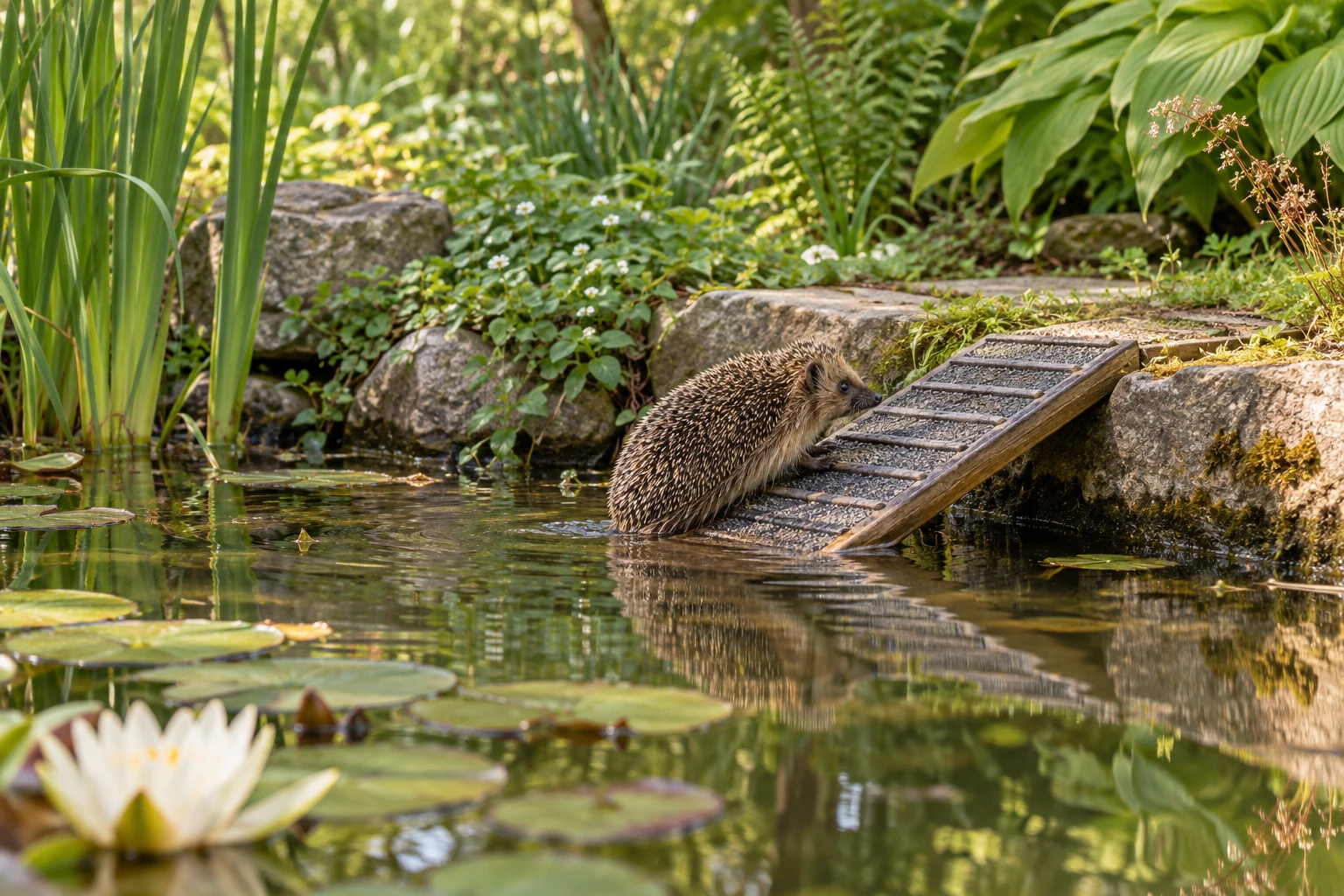
Provide a gradual, rough-textured exit from the water. A pond should have at least one shallow slope, stepped edge or securely fixed ramp that small animals can use. Avoid smooth, vertical sides around the entire pond. Cover deep, narrow water containers or add an appropriate escape structure.
Protect pump inlets and keep cables secure. Use suitable aquatic plants without allowing the whole surface to become inaccessible. Never move water, plants, sediment, eggs or animals between ponds unless authoritative local guidance specifically permits it; this can spread disease and invasive species.
A wildlife escape ramp does not make a pond safe for unsupervised children.
Why are netting, wire and litter dangerous?
Wild animals can become entangled in loose fruit netting, sports nets, fencing, twine and plastic rings. Store nets when not in use. When netting is necessary, select an appropriate design, install it taut and off the ground, secure the edges and inspect it frequently. Wildlife-safe specifications differ by use and species, so follow local expert guidance.
Remove loops from packaging before disposal and collect cut wire, cable ties and fishing line. If an animal is entangled, do not pull or cut blindly: injuries may be hidden. Contact an authorised wildlife rehabilitator or animal service.
What should I check before mowing, strimming or pruning?
Inspect the work area immediately before starting. Look through long grass, leaf piles, hedge bases, compost edges and dense vegetation. Move slowly and use hand tools where that meaningfully reduces risk.
Before burning a pile, rebuild it on the day where feasible rather than lighting an old stack in place. Check sheds and machinery before closing doors or starting equipment.
Nests, roosts, dens and protected species may be subject to local law. Check the applicable season and wildlife rules before pruning, felling, roofing or demolition. If an active nest or occupied refuge is found, stop and seek local authoritative advice.
Should I avoid all garden chemicals?
Reducing chemical use lowers the chance of direct poisoning and harm through contaminated prey. Begin with prevention: choose suitable plants, tolerate some damage, improve soil health, remove affected material and use physical barriers that do not trap wildlife.
If a pesticide, herbicide, slug control or rodent-control product is necessary, confirm that the use is lawful, follow the label exactly and prevent access by children, domestic animals and non-target wildlife. Never increase the dose or use outdoor chemicals in an unapproved way. Professional advice may be needed for infestations or invasive species.
Rodent poisons can harm predators and scavengers through secondary exposure. Use a prevention-led approach and obtain qualified local pest-control advice.
Which plants make a garden safer and more useful?
Choose plants suited to the local climate, soil and native wildlife. A varied structure—ground cover, grasses, shrubs and trees—can provide food, shelter and movement routes. Continuous flowering across seasons may support pollinators where the species are locally appropriate.
Avoid planting invasive non-native species, even if they are sold as wildlife friendly. Check an official regional list and buy from sources that can identify plants accurately. Do not collect wild plants or move soil, pond material or animals from natural sites.
Retain leaves, dead stems or wood where compatible with fire, pest and access needs. A refuge should be stable and free from chemicals.
Are feeders and water stations always helpful?
No. Supplementary feeding can concentrate animals, spread disease, attract predators or provide unsuitable food. If you feed wildlife, use guidance from a recognised local wildlife authority for the species. Offer appropriate food, clean feeders and water containers regularly, remove mouldy material and stop if sick animals or persistent contamination are observed.
Fresh shallow water can be valuable, especially in dry weather, but containers need stable footing, frequent cleaning and a safe exit. Do not place food or water where animals are funnelled past glass, roads, cats or other hazards.
How can I reduce risks from glass, light and pets?
Transparent and reflective panels can cause bird collisions. Use an effective external pattern or screen over the hazardous area; a single decorative sticker is usually not enough. Position feeders and vegetation with collision risk in mind and link to specialist window guidance.
Outdoor lighting should be used only where needed, directed downward and switched off when unnecessary. Preserve dark routes and avoid illuminating nests, roost entrances or feeding sites. Requirements around security and protected species vary locally.
Manage cats and dogs so they cannot stalk, chase or reach wildlife. Secure outdoor areas, supervision and species-appropriate enrichment can reduce risk. Keep companion-animal food indoors and do not allow pets to investigate nests, ponds or injured wildlife.
What should I do if I find injured or trapped wildlife?
Keep people and domestic animals away and observe from a safe distance. Do not offer food, water, medication or home treatment. Do not handle, relocate or release the animal unless an authorised local professional instructs you to do so.
Contact the wildlife authority, authorised rehabilitator, animal service or veterinarian appropriate to your location and species. Take a photograph from a safe distance and note the exact location and hazard. If immediate danger exists, follow professional instructions; capture and rehabilitation laws vary.
Practical Takeaway
Remove hazards before adding new wildlife features. Give water an exit, control netting and litter, inspect before cutting, reduce chemical use, manage glass, light and pets, and choose locally suitable plants. Recheck the garden as seasons and equipment change. A safer garden offers food, shelter and movement without turning ordinary features into traps—and leaves rescue and treatment to authorised professionals.
Frequently Asked Questions
Should I move frogspawn or pond animals into my new pond?
No, unless an official local authority specifically advises it. Moving water, plants, sediment or animals can spread disease and invasive species. Allow wildlife to arrive naturally.
Is a ramp enough to make a deep container safe?
It must be stable, rough, correctly angled and reachable from the water. Covering an unnecessary container may be safer. Check escape structures regularly after rain, wind or cleaning.
Should I leave my garden completely wild?
Not necessarily. A mixture of managed access and undisturbed refuge can work well. Remove entanglement, poisoning, fire and trapping risks while retaining useful vegetation and shelter where safe.
Are “natural” pesticides safe for wildlife?
Not automatically. Natural substances can harm target and non-target species. Use only lawful products as labelled and prioritise prevention and non-hazardous controls.
Can I free an animal caught in netting myself?
Do not attempt it without professional guidance. Hidden constriction injuries, bites, scratches and further entanglement are possible. Keep the area quiet and call authorised local help.
Sources
Publisher: Royal Horticultural Society
Title: Wildlife Ponds
URL: https://www.rhs.org.uk/ponds/wildlife-ponds
Use: Shallow pond access, escape routes, planting, pump safety and avoiding movement of pond material that may spread disease or invasive species.
Checked: 16 September 2026
Publisher: Natural History Museum, London
Title: Seven Ways to Create a Wildlife-Friendly Garden
URL: https://www.nhm.ac.uk/discover/seven-ways-to-create-a-wildlife-friendly-garden.html
Use: Habitat structure, water, planting and practical garden features that support local wildlife.
Checked: 16 September 2026
Publisher: RSPCA
Title: Attracting Hedgehogs to Your Garden
URL: https://www.rspca.org.uk/adviceandwelfare/wildlife/hedgehogs/garden
Use: Netting storage and installation, garden access, pond escape routes and hedgehog-safe maintenance.
Checked: 16 September 2026
Publisher: People’s Trust for Endangered Species
Title: Hazards to Wildlife in Gardens
URL: https://ptes.org/hazards-to-wildlife-in-gardens/
Use: Risks from strimmers, compost heaps, garden machinery and concealed wildlife, with prevention measures.
Checked: 16 September 2026
Questions or corrections? Contact Aniluba and include this page’s address.